What Is a Hunstead?
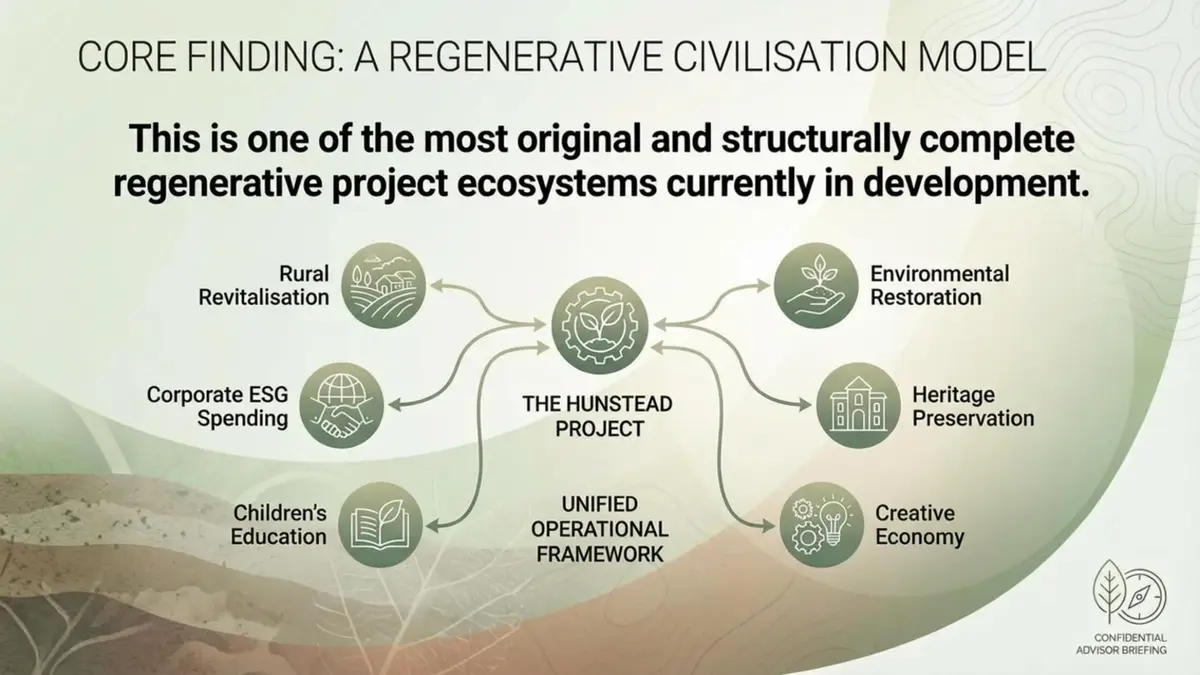
A Hunstead is a community-owned, creatively developed regenerative micro-village - part homestead, part game world, part rural innovation engine - built together by its members and brought to life in the real world.
The Hunstead Concept
Hunstead began as a simple idea with a powerful twist:
Imagine a cooperative building game — like Minecraft meets Farmerama — where everything you create together actually gets built in the real world.
Members propose ideas ("upsteads"), vote on them, fund them together through micro-units, and watch them take shape on actual land. The process is collaborative, playful, and grounded in regenerative principles.
Each Hunstead is divided into 100 keys (1% each). Owning a key makes you a co-steward and co-creator of that Hunstead.
Keyholders:
- Develop the property together
- Vote on ideas
- Fund projects cooperatively
- Stay and work on the land
- Help shape the culture and theme of their Hunstead
The result is a living ecosystem where ideas turn into upsteads, upsteads turn into projects, and projects turn into lasting regenerative infrastructure.
How the Hunstead Model Works
100 Keys – 1% Contribution Structure
Every Hunstead property is divided into 100 fractional keys. Members may buy between 1 and 25 keys, depending on the Hunstead's setup.
Your percentage ownership determines:
- Your voting weight
- Your responsibility in funding upsteads
- Your share of micro-business revenue
- Your influence over the property's evolution
There is no speculative property flipping.
Hunsteads are placed into long-term trust structures to ensure they remain regenerative assets for decades.
Upsteads: The Heart of Hunstead Development
Upsteads are member-proposed ideas to improve or expand a Hunstead. These become the "building blocks" of each property.
Tiny houses
Off-grid cabins
Chicken coops
Solar setups
Garden expansions
Fire pits & community spaces
Greenhouses
Yurts, saunas, meditation pods
Art installations
Food forests
Water systems
Animal spaces
How Upsteads Work:
Every Upstead is converted to a shop item, priced as:
100 units = 100 × 1% of the total cost
If the Upstead costs £200, each unit is £2.
When all 100 units are purchased, the project moves forward and becomes reality.
Unsuccessful Upsteads (those that don't hit 100 units in time) are refunded — ensuring the system stays dynamic, fast-moving, and democratic.
The Three Zones of Every Hunstead
Living Zone
- • Main house
- • Accommodation spaces
- • Cabins, tiny homes, pods
- • Communal interior spaces
Food Zone
- • Regenerative agriculture
- • Permaculture gardens
- • Animal systems
- • Orchards & perennial beds
Creative Zone
This is where each Hunstead becomes unique.
Hunsteads are themed — groups join because they share a common passion.
Example Creative Zone Themes:
This is where Hunstead becomes culture, identity, and imagination — not just land.
The Game Logic
The Hunstead model draws from popular cooperative games:
Minecraft
Creativity, construction, shared world-building
Farmerama
Food production, land management
Social MMOs
Collaboration, voting, shared goals
But Hunstead's twist is simple:
Everything you build in the "game" becomes real infrastructure on land.
The Powerful Feedback Loop:
- 1Propose ideas
- 2Vote
- 3Fund micro-units
- 4Watch the project appear physically
- 5Use it, enjoy it, expand it
This keeps Hunsteads dynamic, engaging, and endlessly evolving.
Long-Term Vision: The Hunstead Network
Hunstead isn't one place.
It's a network of regenerative micro-villages, all connected.
Phase 1 – The Balaton Loop
Hunsteads placed in a circle around Lake Balaton, ~10 miles apart.
This creates a walkable, bikeable, rideable regeneration corridor.
Phase 2 – The European Routes
Four major routes radiating outward:
- • West to Austria → Germany → France → Calais
- • South toward Croatia/Slovenia
- • North toward Slovakia
- • East toward Romania
Ultimately:
All Routes Lead to Hunstead World.
A regenerative circuit across Europe.
Why the Hunstead Model Works
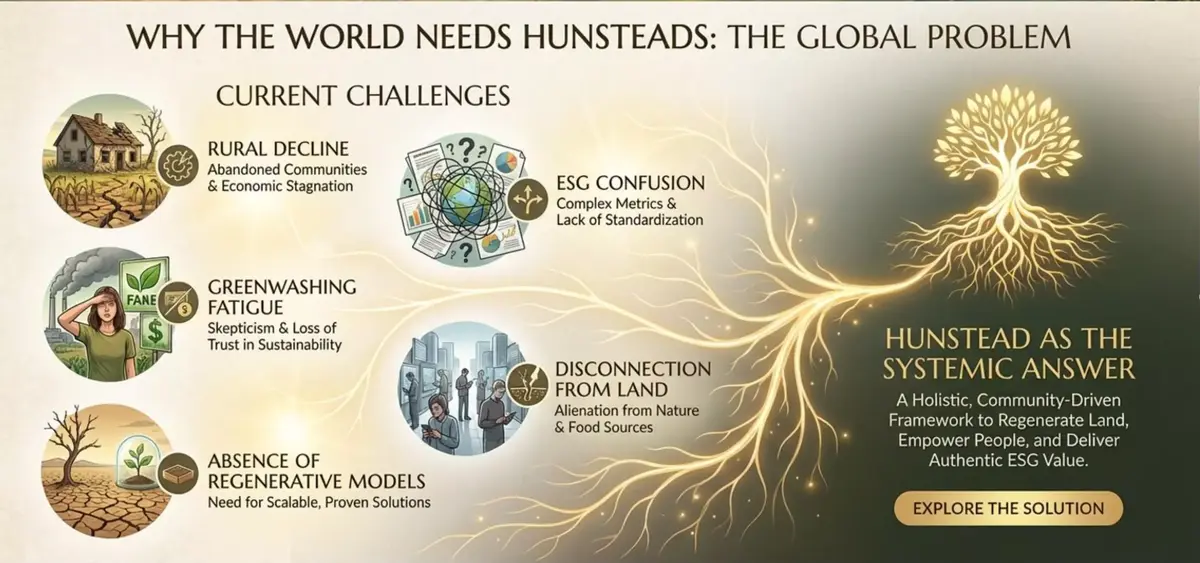
Hunstead solves real problems:
- Rural depopulation
- Land abandonment
- Lack of regenerative infrastructure
- Lack of community ownership models
- Lack of creative rural opportunities
- Need for real-world skill-building
- Need for low-barrier investor participation
- ESG fatigue and demand for measurable outcomes
And it does it through:
- Co-funding
- Co-creation
- Creative play
- Real stewardship
- Transparent governance
- Regenerative land use
- Community empowerment
Call to Explore
Hunstead is more than a shared property.
It's a new operating system for rural Europe.
Whether you're:
a potential keyholder
a Munka
an investor
a regenerative practitioner
or simply someone curious about a new way of living and creating
Hunstead is open to you.